For Indian law firms
Build your case on the record.
Ask across every document in a matter, check the answer against the page it came from, and draft from the facts, under the current law and in the language the record is in.

How it works
Follow one matter, start to finish.
01/Cases
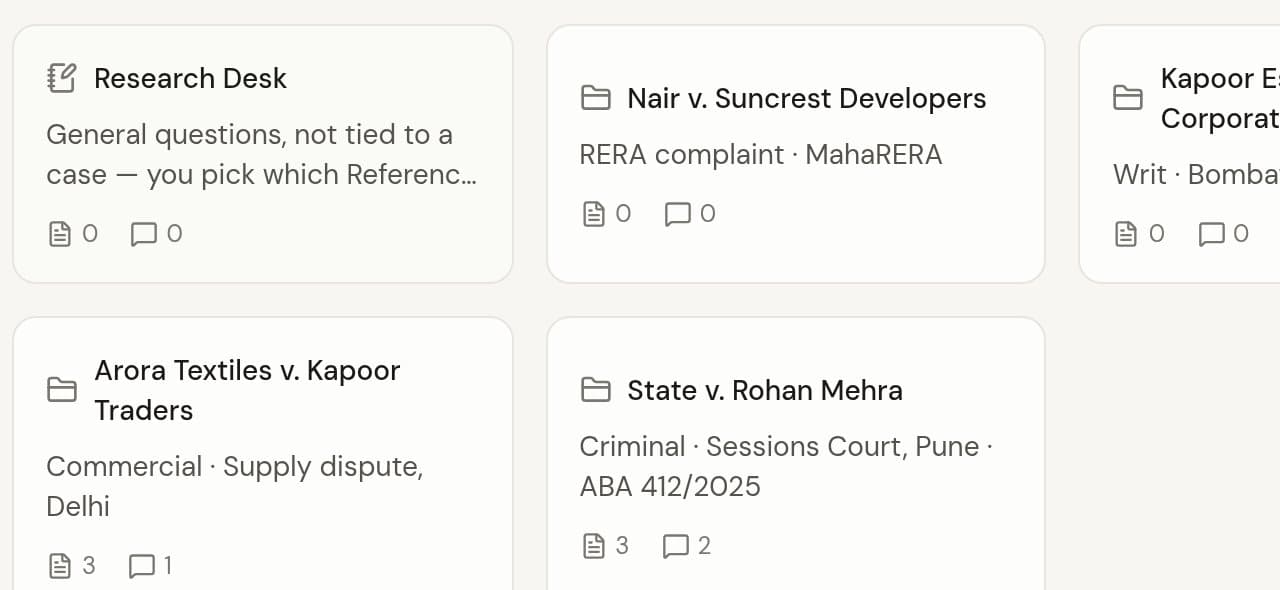
One matter, one file.
Every case keeps its own documents and its own threads, the way a physical file does. A question asked inside a case searches that case and nothing else, so one client's papers never turn up in another client's answer.
- Upload PDFs and Word files, typed or scanned
- Every thread inside a case searches all of its documents automatically
- A Reference Library holds the firm's precedents and templates, outside any case
Painting: Amrita Sher-Gil, Village Scene, 1938 02/Research
Ask it anything you'd ask a junior.
Ask in plain words: what the complainant admitted, when notice was served, where the timeline breaks. The answer cites the file and page for every point, and one click opens the document at that passage.
- Every citation is checked against a real source before you see it
- Answers say what they rest on: your documents, statute text, or nothing
- No documents? It still answers from the Bare Acts, and labels it that way
Painting: Gaganendranath Tagore, City in the Night, 1925 03/Drafts
A first draft built from the file, not from memory.
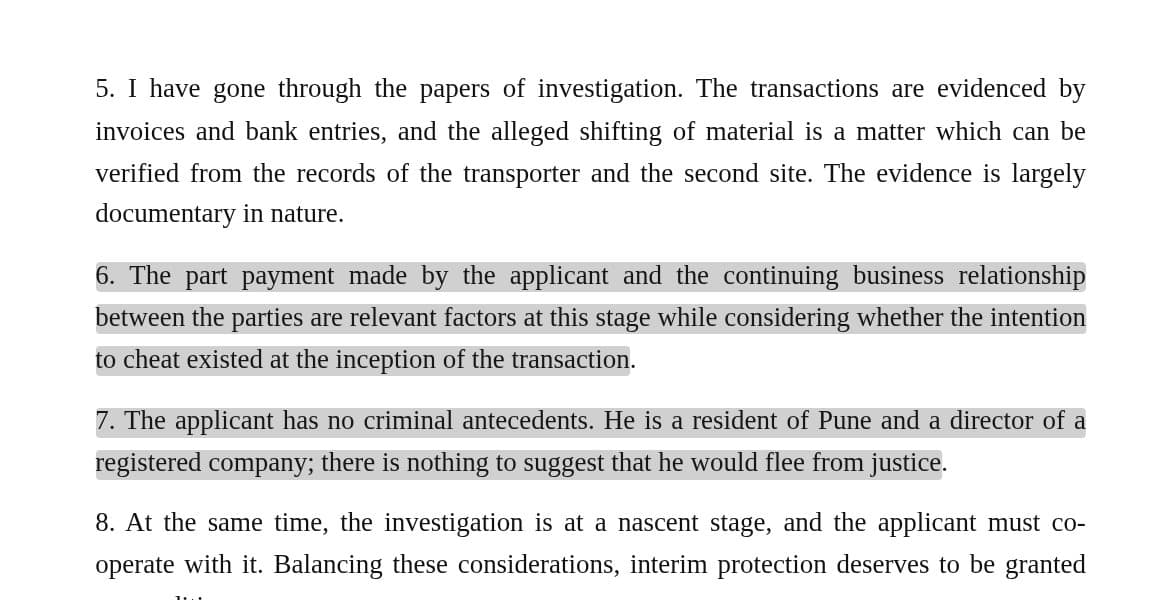
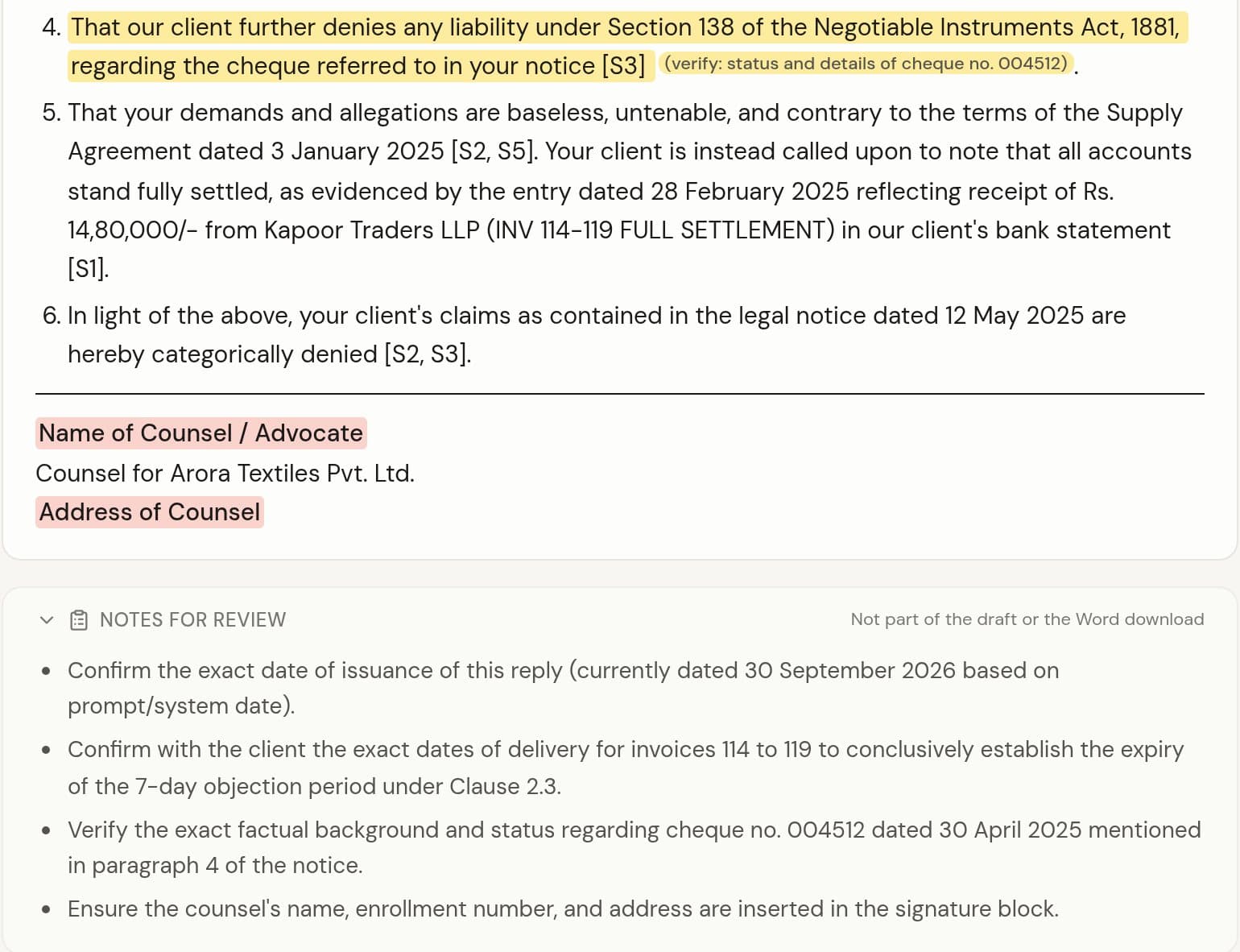
Ask for a reply, a notice or an application, and it drafts from the documents in the matter, citing each fact. What it can't find, it leaves as a marked blank, never an invented detail. Edit it right there, then export to Word with every citation as a proper footnote.
- Red marks a detail to fill in; yellow marks a line to review
- Laws or cases it couldn't find in your sources are marked “verify”
- Edits save as you type, and you can always revert to the original
Painting: Gaganendranath Tagore, Meeting at the Staircase, c. 1920–25


Principles
Careful by default
Careful by default.
It shows its work.1 It admits what it doesn't know.2 It keeps matters apart.3 It leaves the judgment to you.4
- 1
It shows its work. Every point in an answer points to a page you can open.
- 2
It admits what it doesn't know. A missing fact becomes a blank, not a guess. An answer with no sources says so.
- 3
It keeps matters apart. A case's documents are searched only inside that case.
- 4
It leaves the judgment to you. It drafts and researches; the advocate reviews, signs and files.
Bare Acts
It knows the codes changed in 2024.
Old section numbers are still in every file, pleading and habit. Mention 302 IPC or 438 CrPC and the answer gives the BNS or BNSS section beside it, flagged, so nothing is drafted under a repealed code.

847
Central Acts, in current consolidated text
35,401
sections, each cited like any other source
1,343
IPC, CrPC and Evidence Act sections mapped to their new counterparts
- IPC 302
- BNS 103Punishment for murder
- IPC 420
- BNS 318(4)Cheating
- CrPC 438
- BNSS 482Anticipatory bail
- Evidence Act 65B
- BSA 63Electronic records
Languages
The letter is in Hindi.
The question is in English.
Panchnamas, orders and deeds are read in English and all 22 scheduled languages, scanned pages included. Ask in whichever language you think in, Hinglish too, and it finds the line in every language on the record.
- हिन्दी
- मराठी
- বাংলা
- தமிழ்
- తెలుగు
- ಕನ್ನಡ
- മലയാളം
- ગુજરાતી
- ਪੰਜਾਬੀ
- ଓଡ଼ିଆ
- অসমীয়া
- اردو
- कोंकणी
- मैथिली
- नेपाली
- संस्कृतम्
- سنڌي
- کٲشُر
- डोगरी
- बड़ो
- संताली
- মৈতৈলোন্
- English

Painting: Amrita Sher-Gil, Bullock Cart, 1937
For firms
One workspace for the whole chamber.
Invite your associates, set who can manage what, and see how the firm actually uses it.
- Members and roles
- Invite your associates. Owners, admins and members each see what they should.
- Chamber
- Who was active each day, which features get used, and which members rely on it most. Visible to owners and admins only.
Coming next
Junior
SoonHand over a task, like a chronology, a list of dates or a first-cut reply, and review what comes back.
Workflows
SoonThe repeatable steps your firm already follows, like a bail application or a due-diligence checklist.
Case law
SoonSupreme Court judgments searched and cited alongside your file and the Bare Acts.